In her new paintings, Helena Parada Kim returns to a question that has long been central to her work: How is identity shaped by what is inherited, remembered, carried, and seen? Born in Cologne to a Spanish father and a Korean mother, she understands her own cultural background as an interplay of diverse and continually shifting influences.
Fabrics, ornaments, and traditional Korean garments coalesce into complex pictorial spaces in which forms seem to overlap, obscure one another, and merge into each other. The hanbok, a recurring motif in Parada Kim’s work, functions less as a symbol than as a kind of vessel: it carries within it family history, migration, cultural memory, and the instability of belonging. References to East Asian painting coexist with echoes of European art history as traditions that do not stand in opposition to one another, but have long been intertwined.
The exhibition title, “Entangled,” describes both the formal structure of these paintings and the condition they express. Leaves merge into textiles, patterns into bodies, one visual language into another. What emerges is a space that itself becomes the subject, one shaped by the naturalness of their simultaneous coexistence.
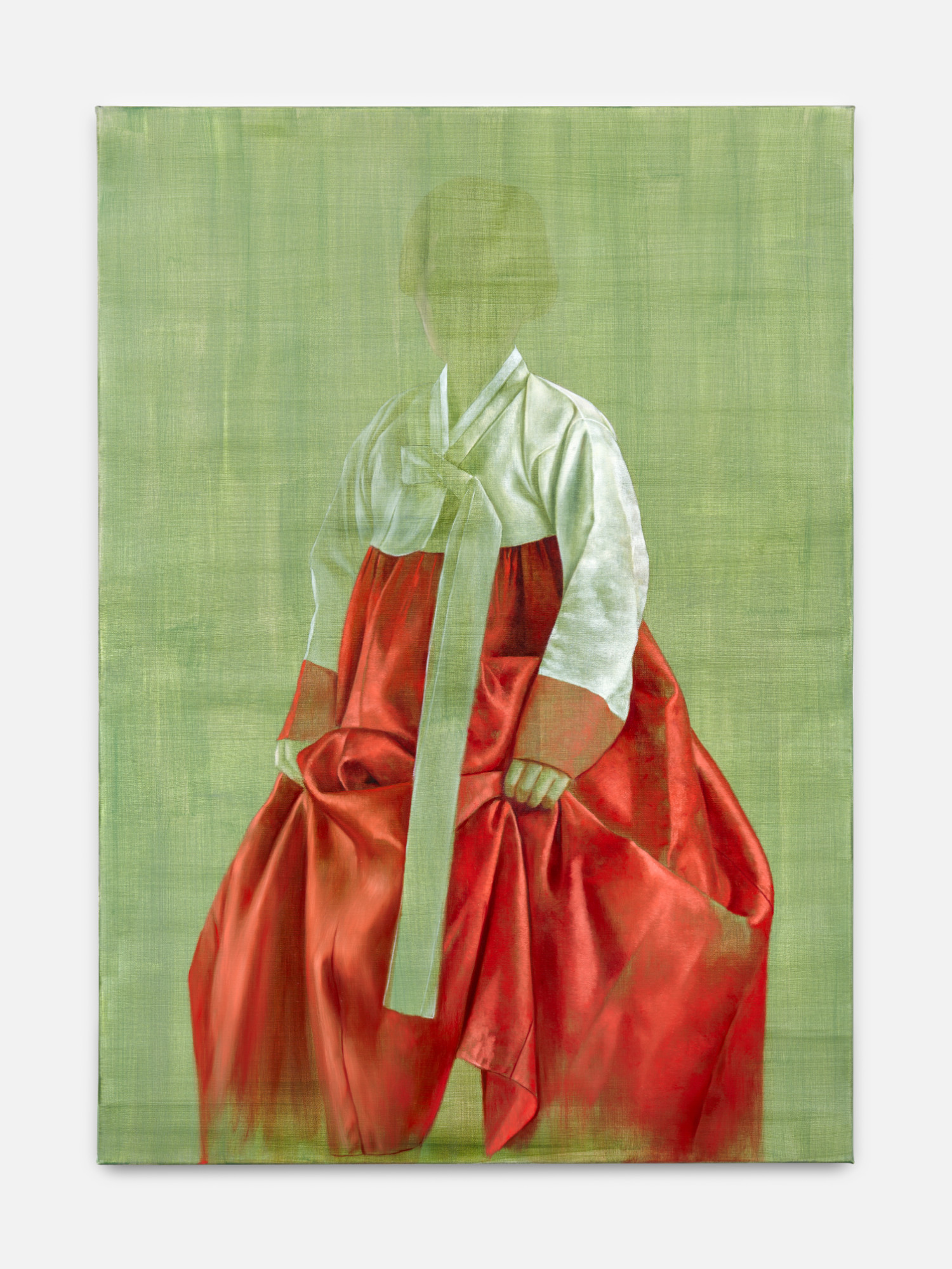
Helena Parada Kim
Woman in Red Hanbok
2026, Öl auf Leinen, 140 x 100 cm
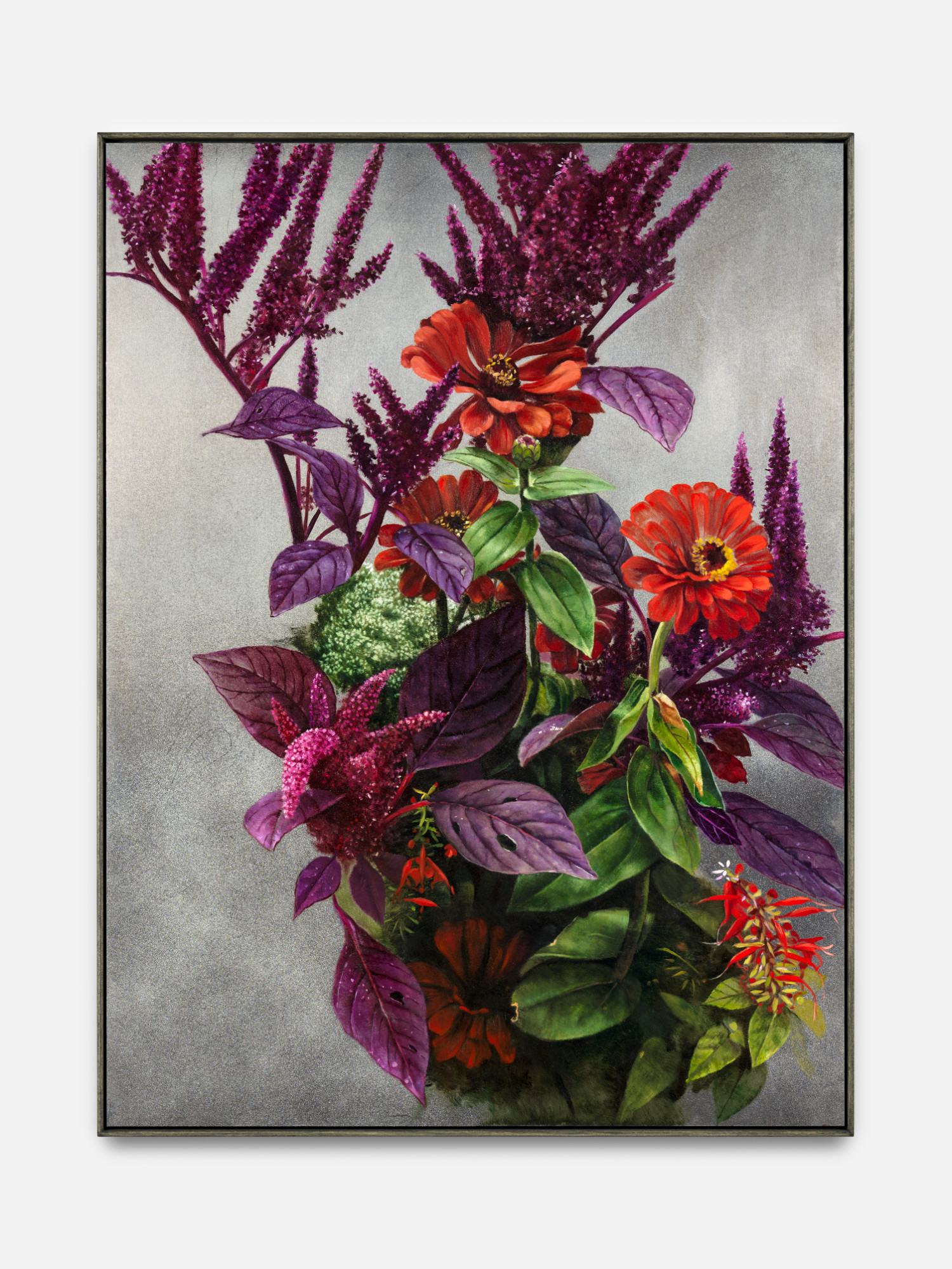
Helena Parada Kim
Zinnias and Amaranth
2026, Oil on Aluminium, 80 x 60 cm
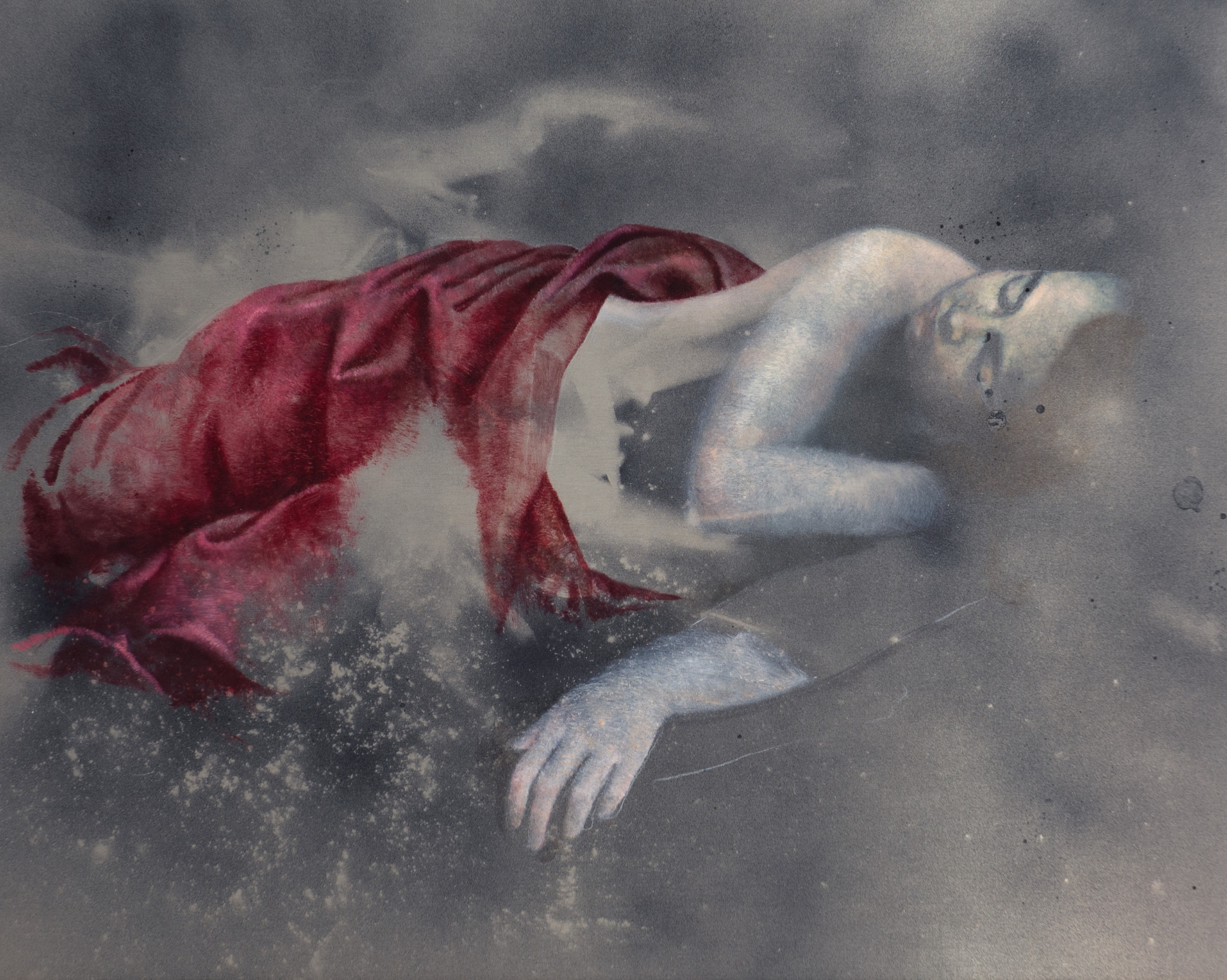
Helena Parada Kim
Sleeping Child
2026, Oil on Aluminium, 40 x 50 cm
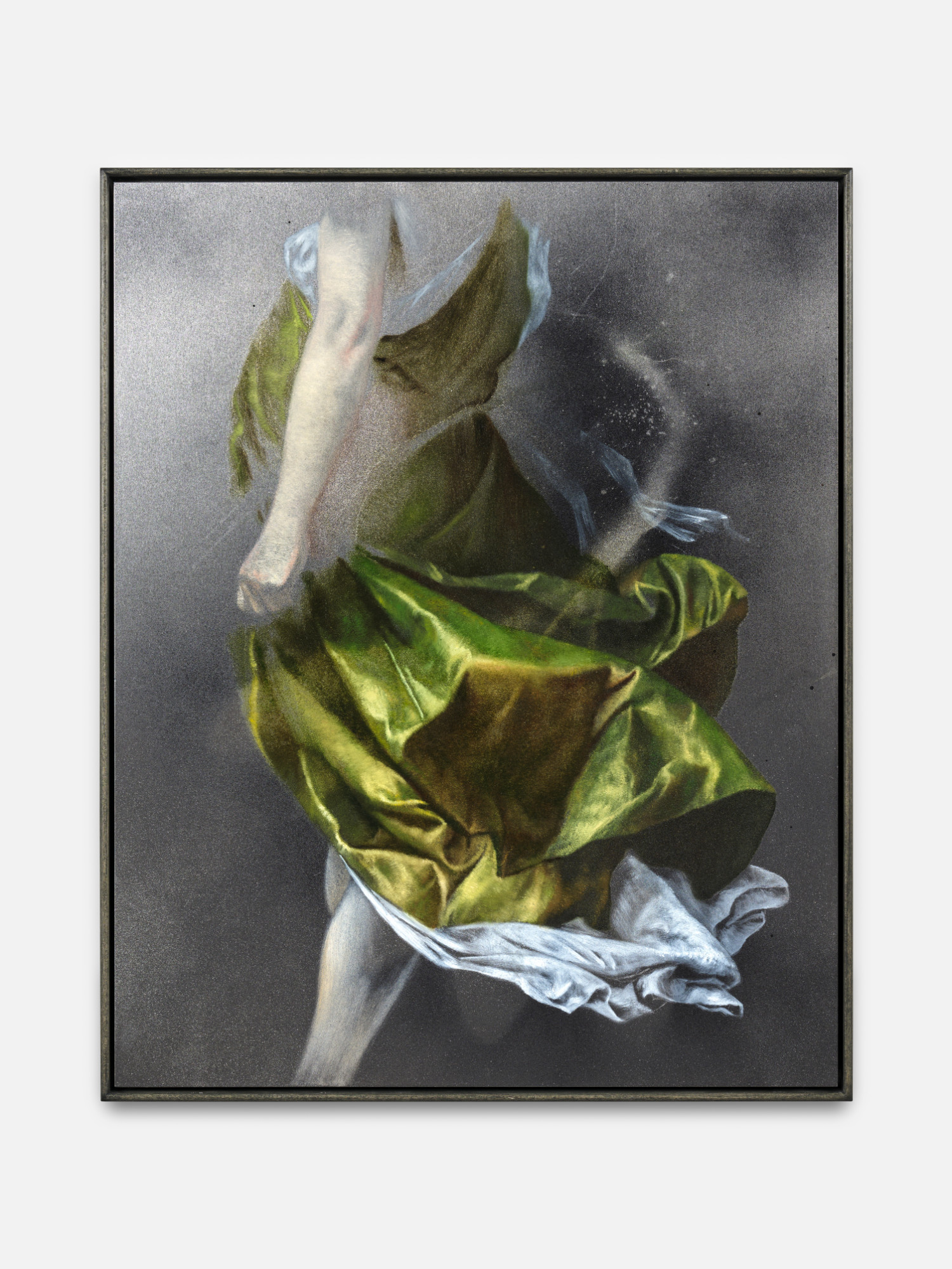
Helena Parada Kim
Diana
2026, Oil on Aluminium, 50 x 40 cm
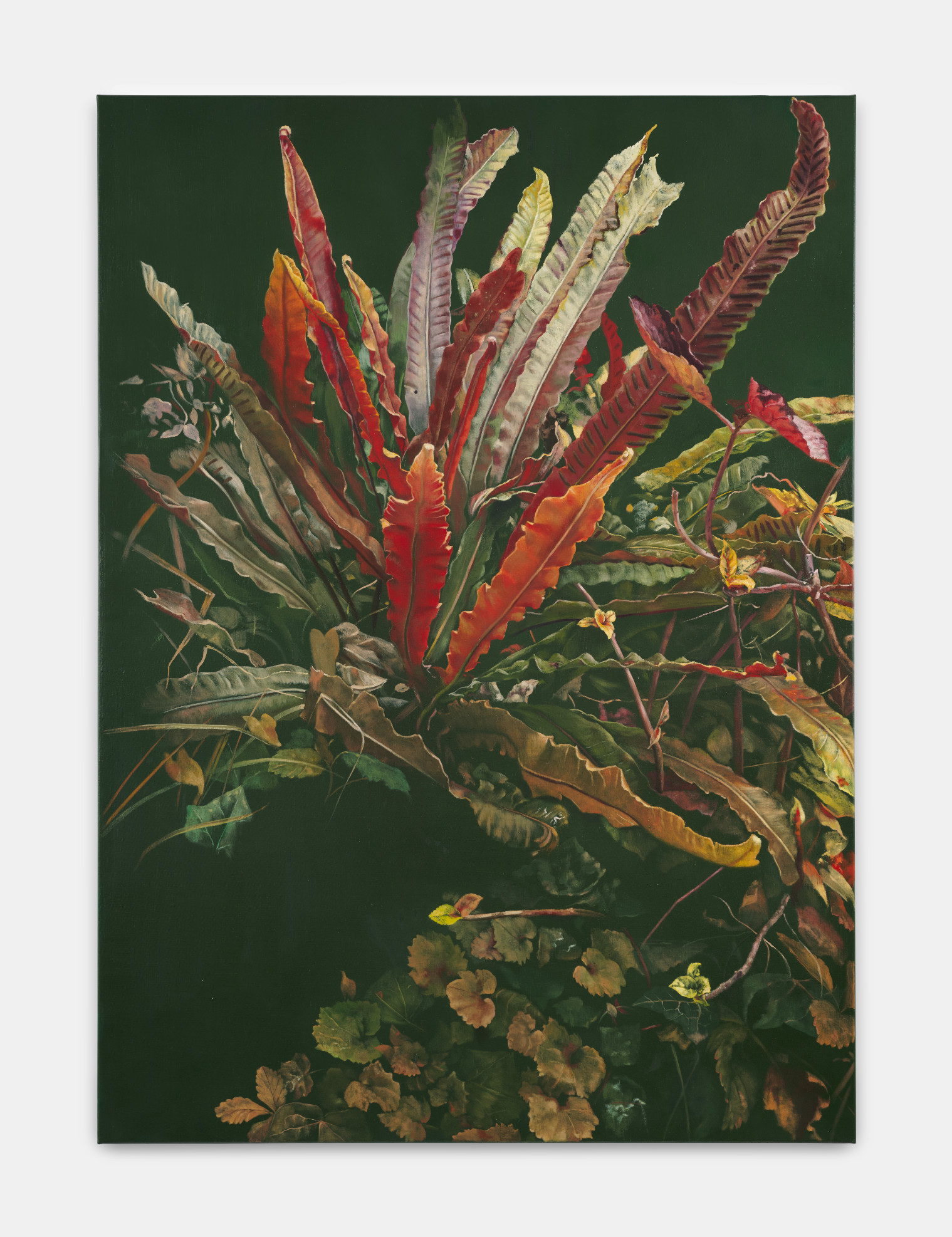
Helena Parada Kim
Hart's Tongue Fern I
2026, Oil on Linen, 180 x 120 cm

Helena Parada Kim
Passiflora
2026, Oil on Silver Grounded Linen, 140 x 170 cm
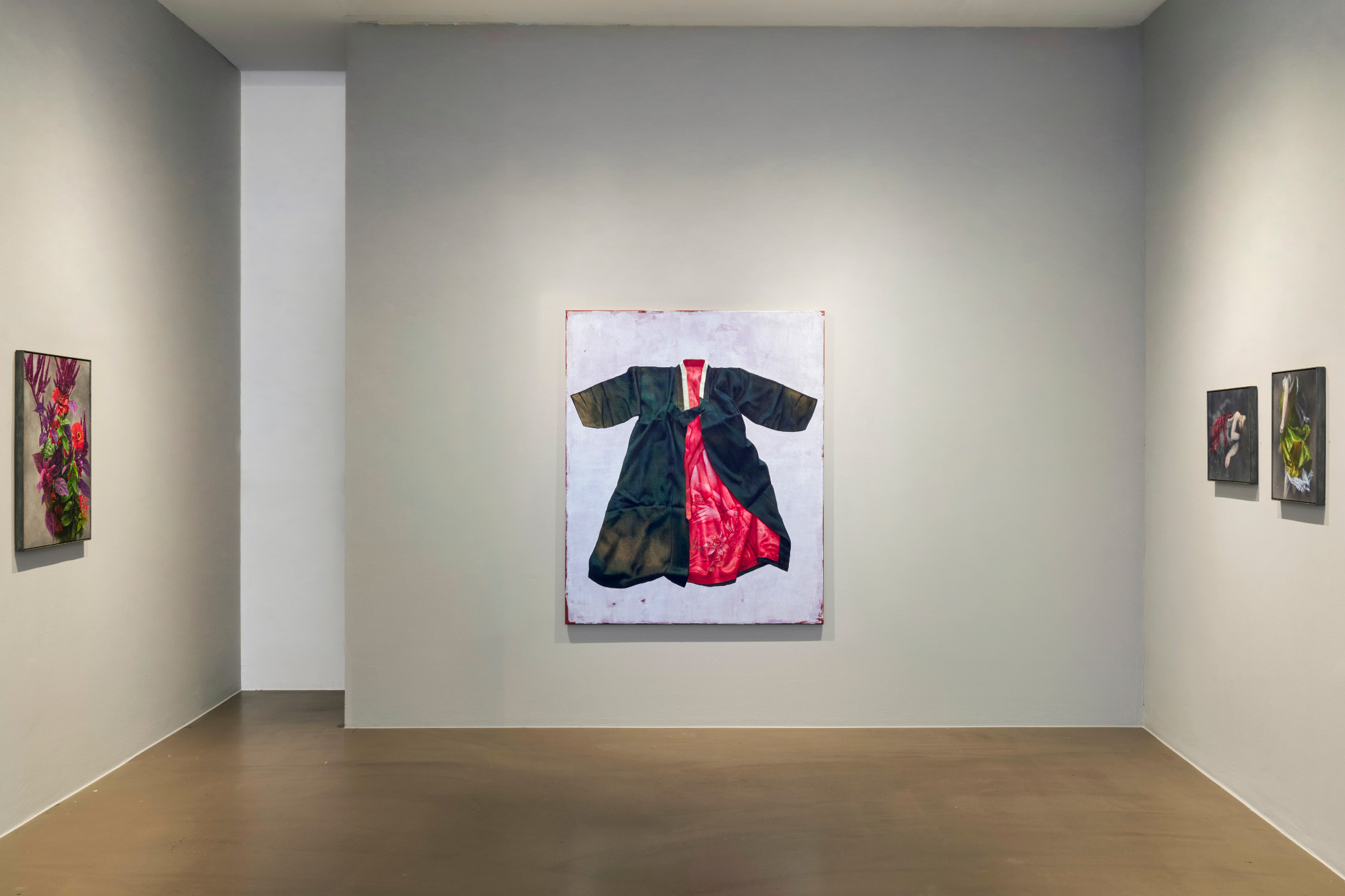
Helena Parada Kim
Exhibition view
2026, photo credits: Mareike Tocha
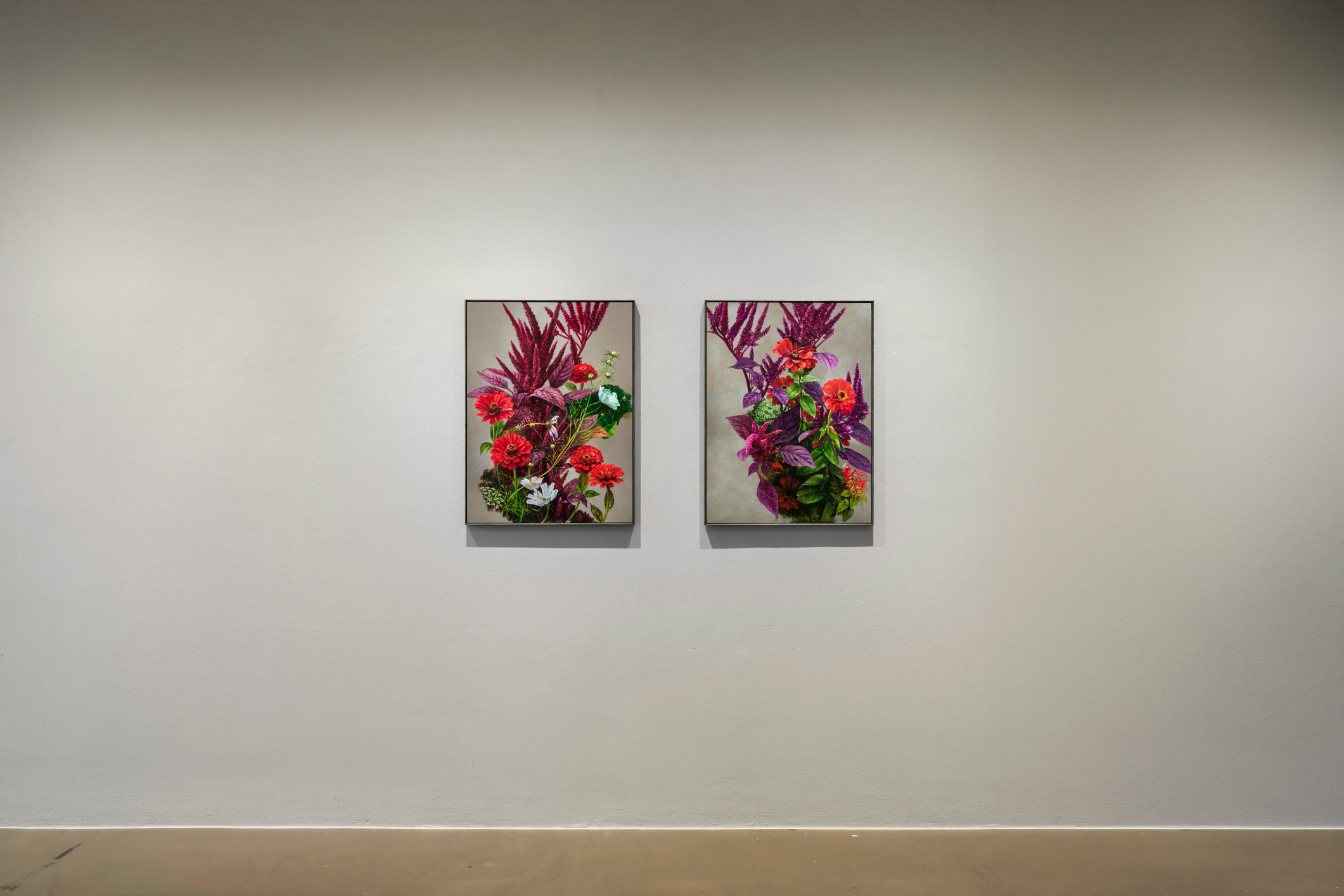
Helena Parada Kim
Exhibition view
2026, photo credits: Mareike Tocha
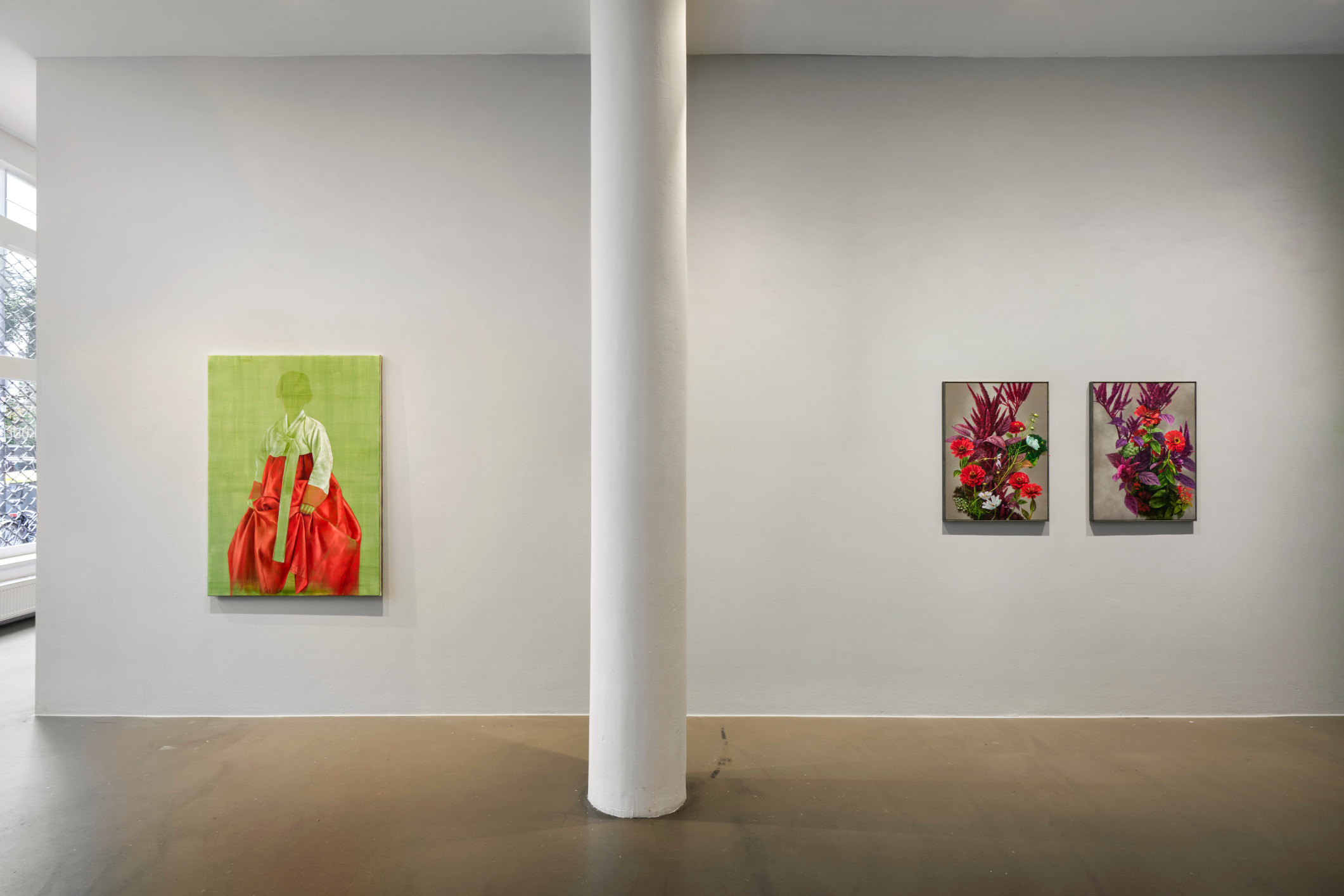
Helena Parada Kim
Exhibition view
2026, photo credits: Mareike Tocha